




Sesamoid Injuries and Sesamoiditis Treatment Guide
Sesamoid pain in the foot occurs directly under the big toe joint and can be debilitating. If you are in the Seattle area, make an appointment to see us right away.
If you are not in the Seattle area you can try our self-treatment recommendations for sesamoid pain. If you don’t have improvement within two weeks, however, be sure to see a podiatrist.
Video: Best Treatments for Sesamoiditis
What Is a Sesamoid?
 First, here’s a little anatomy lesson to get things started. A Sesamoid is a bone embedded within a tendon and there are any number of them throughout the body. The foot contains 26 bones, 33 joints and 31 tendons. Taken together, this represents a large number of Sesamoids. If any of these are injured, it can be quite painful because they are located in a regularly flexing joint.
Sesamoid bones are tiny bones within the tendons that run to the big toe. These bones help to aid in the bending of the big toe. Every time you push off against the toe, the Sesamoids are involved and eventually they can become irritated, even fractured. Sesamoid problems often don’t heal on their own – if you have pain under the ball of your foot, contact us today for an appointment.
What Is a Sesamoid Injury?
A Sesamoid injury may involve just the joint or can include the bones, tendons, and surrounding tissue as well. Sesamoid injuries are commonly associated with over-use by athletes, and with repetitive, high pressure activities, such as running, ballet, basketball, golf, tennis, football, and any other activity that generates high stress on the balls of the feet. High heeled shoes, which also create pressure on the balls of the feet, can also cause a Sesamoid injury, as can uncommonly high arches in the feet.
What Are the Most Common Types of Sesamoid Injuries?
The four most common Sesamoid injuries are:
- Sesamoiditis – This is a common over-use injury with inflammation of the Sesamoid bones and related tendons.
- Turf toe – This is a common football injury affecting the soft tissue immediately surrounding the big toe joint. Pain tends to be immediate and severe, with swelling of the big toe and limited movement.
- Metatarsalgia –This is a non-specific pain across the ball of the foot. The most common cause of metatarsalgia is a condition called “capsulitis”, which is an inflammation of the joints of the ball of the foot
- Stress fractures – This is commonly caused by over-use of a Sesamoid bone.
What is Sesamoiditis?
The term Sesamoiditis is used to describe an injury to any of the multiple Sesamoids in the body – most commonly inflammation due to over-use. The condition can be quite painful and regular because it’s within a flexing joint. The most common symptom of Sesamoiditis is pain in the ball of the foot and under the big toe at the ball of the foot that ranges from a mild ache to an intense throbbing.
One of the major causes of Sesamoiditis is increased activity. Speedwork, hill work, or even increased running mileage can cause this. Also, if you have high arches, you will naturally put more pressure on the balls of your feet.
What is the Treatment for Sesamoid Injuries?
Treatment for Sesamoid injuries and Sesamoiditis is almost always noninvasive and surgery is rarely necessary but may be an option if conservative options fail. Our first goal is to reduce pressure on the Sesamoid bones.
Common treatment therapies for Sesamoiditis may include:
- Temporary walking cast to relieve pressure
- Custom orthotics or arch supports
- Shockwave therapy
- Proper shoes
- Rocker sole shoes
- Shoe modifications
- Ice therapy
- Anti-inflammatory medications
- Steroid injections to reduce inflammation
- Non-weight bearing period
- Physical therapy
- Padding or strapping
Sesamoids Can Be Hard to Heal
It is important to understand that the sesamoid bones are subjected to a huge amount of force with every step and this can sometimes make them difficult to heal.
In these situations we often must put patients in a walking boot for 6 – 8 weeks and build up the inside of the boot so that the sesamoid bears no weight at all. In addition we will often teach the patient a taping technique for the big toe that reduces the tension on the sesamoids from the tendons that attach to them.
After coming out of the boot we will transition the patient into a stable shoe with a very, very tight fitting custom orthotic (called a “total contact orthotic“) to most effectively transfer pressure off of the sesamoid.
In extreme cases, surgery may be recommended as a last resort, though this is rare.
How Custom Orthotics Reduce Pressure on Painful Sesamoids
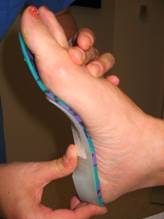
Note how closely orthotic matches contour of foot.
Custom functional orthotics, if properly prescribed and fitted, will dramatically reduce pressure on the ball of the foot and the Sesamoids – leading to decreased pain and less chance of pain returning. Orthotics for Sesamoiditis are prescribed specifically to help take weight off of the painful Sesamoid and to distribute the force onto the arch or onto the non-painful metatarsal heads. This requires an orthotic that conforms extremely close to the arch of your foot.
These are called total contact foot orthotics. In addition, special pads are added to further reduce pressure on the Sesamoids. You can read here how these orthotics must be made to properly treat the Sesamoid injury. In order to ensure best outcomes from your orthotics, we start with a detailed examination, slow motion video analysis of your foot mechanics then take a mold of your foot in a very specific position. The orthotics are prescribed to best reduce force and trauma to your Sesamoids.
Shockwave Therapy for Sesamoiditis
A preliminary study has shows very good results for the use of shockwave treatment in treating sesamoid pain. In a study of 10 patients with sesamoid pain shockwave therapy decreased pain in 9 out of 10 of the patients. The average time for return to activity was the average time to return to activity was 5.4 ± 5.6 weeks (between 1 – 12 weeks)1. Larger scale studies are ongoing and this information will be updated when they are published.
As with all treatments, Shockwave Therapy has both advantages and disadvantages:
Advantages of Shockwave for Sesamoiditis:
- Likely assists in actually healing the tissue, rather than masking it as an injection might.
- Studies on similar tissues show about 70 – 80% effectiveness at healing the tissue.
- Shockwave is completely safe with absolutely no side effects or potential complications.
Disadvantages of Shockwave for Sesamoiditis:
- Healing time is relatively slow, although this tends to be true of sesamoid problems in general. Because shockwave acts to stimulate a healing process, it does not provide immediate relief as an injection might. Maximum clinical benefits are found at 12 – 20 weeks with an average of 16 weeks to maximum benefit.
- Shockwave therapy is not covered by insurance. The cost is $200 per session. 6 sessions are recommended for the best outcomes for a total cost of $1200
- We will do the first 3 sessions 3 weeks in a row and then the final 3 sessions over a 6 week period
- If we are treating two feet at the same time the cost is $1900.
- Studies on shockwave therapy for sesamoiditis, while encouraging, are currently limited.
Learn more about shockwave therapy here.
Home Treatment for Sesamoiditis
You can try the following home treatments for sesamoiditis. The products below are the ones we recommend to our patients and they are also affiliate links so we may receive a small commission at no additional cost to you if your order from the link.
The home treatments are focused on reducing pressure on the sesamoid bones. Try self-treatment for a week or so but if you are not seeing improvement find a podiatrist near you who specializes in biomechanics and sports medicine.
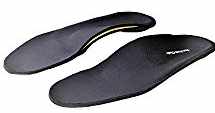
- Use arch supports to transfer pressure off of the painful sesamoid. Arch supports with higher arches work
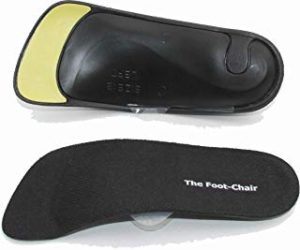
 best for sesamoid conditions. We recommend the FootChair Podiatrist Designed Adjustable Arch Orthotic. These have excellent arch support due to pads that can be inserted under the cover which allow for a very customized fit and more pressure off of the sesamoids. The FootChair Adjustable Arch Orthotic works well for our patients with sesamoiditis and other ball of foot problems.
 - If you have sesamoiditis you should wear arch supports in ALL of your shoes until it is healed. For smaller shoes including high heels, flats and
 soccer cleats, our preferred OTC arch support is the FootChair Slim Orthotic with adjustable arch support. It’s the most effective OTC arch support we have found to fit in women’s heels and flats. It has the same exceptional adjustable arch support as the full-size FootChair but with a much slimmer profile. In addition it flexes to adapt to most heel heights.
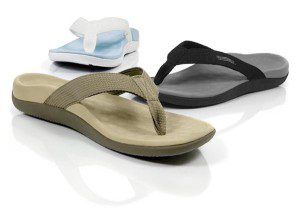
 - When you are not wearing shoes wear a sandal or slipper with arch support. We recommend Vionic sandals and
 slippers. Vionic has exceptional arch support that works great to get pressure off of the sesamoid bones. Remember, the key is to avoid going barefoot at all for a couple weeks.
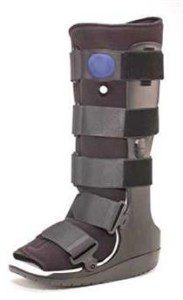
 - If you are still having pain, wear a walking boot to take even more pressure off of the sesamoids. The Air Cam Walker
 is both effective and very inexpensive. If you are having so much pain that you need the walker be sure to make a appointment to see us in Seattle or find a podiatrist with expertise in orthotic therapy in your area.
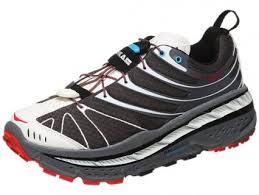
 - Wear a shoe with a rocker sole. A rocker sole shoe acts to transfer pressure off of the ball of the foot. Especially when used in combination with a good arch support as recommended above, this is an unbeatable combination
 to reduce pressure on the sesamoids and let them heal. You can try a rocker shoe like the Hoka Stinson or find our complete list of recommended rocker soled shoes here.
 - Don’t go barefoot at all for at least two weeks.
- Ice your foot for 10 minutes three times each day.
Why Are Ballet Dancers Prone to Sesamoiditis?
Do you have a young ballet dancer in your family complaining of ball of foot pain? If so, your child may be suffering from Sesamoiditis. This over-use injury is common in dancers, even young ones, causes inflammation of the Sesamoid bones and related tendons. The pain can range from a dull ache to an intense throbbing sensation and will require treatment because it will rarely go away on its own.
Ballet, in particular, will increase pressure on the Sesamoids, with frequent positions en relevé. This causes swelling, inflammation, and pain at the ball of the foot. Since young dancers have less padding at the ball of the foot, they are particularly prone to Sesamoiditis, which may make it difficult to bend or straighten the affected big toe.
Sesamoiditis will require your young ballet dancer to rest the affected foot before resuming rehearsal and performances but it should not end her dancing career. If your young ballet dancer complains of persistent ball of foot pain, do not procrastinate getting treatment. Left untreated, Sesamoiditis may lead to a chronic condition that will prohibit the further enjoyment of ballet.
Make an appointment to see us in our Seattle office as soon as possible for treatment and relief of ball of foot pain in young ballet dancers. Each of the Seattle podiatrists at the Foot & Ankle Center of Washington are well-known specialists with expertise in treating children’s feet including Sesamoiditis.
Contact the Foot and Ankle Center for Your Foot Pain
If you are experiencing pain in the big toe joint or ball of foot pain, you may be suffering from a Sesamoid injury. If so, you should visit your podiatrist immediately. For patients who live in the Seattle area, a visit to our office will provide you with relief from your pain and discomfort. Contact us today by calling (206) 344-3808 for an appointment in our convenient downtown Seattle office near Swedish Medical Center.
References for Sesamoiditis
- Saxena, A. Radial Soundwave for Sesamoidopathy in Athletes: A Pilot Study. Journal of Foot and Ankle Surgery. 2016
- Thompson, D Sesamoid osteonecrosis treated with radial extracorporeal shock wave therapy.
