




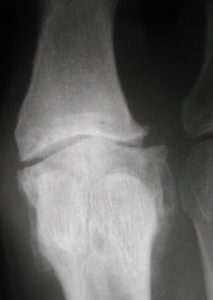
Figure 1: Decrease joint space/arthritis great toe joints
Treatment for a Stiff Big Toe
There are a number of reasons why you may experience painful big toe joints. This page contains information on how to treat and prevent arthritis of the big toe joint or “Hallux Rigidus (“Hallux” means big toe. “Rigidus” means rigid joint). But there are two other common causes of big toe joint pain. Those are:
-
- Bunions (enlargement of the big toe joint)
- Functional Hallux Limitus (jamming of the big toe joint).
“Limitus” means a limited amount of motion. “Functional” means that it happens during function or while walking, but there is not necessarily any permanent damage to the joint.
Video: Treatment Options for Big Toe Joint Arthritis
What is Hallux Rigidus?
Hallux rigidus means “stiff big toe joint”. This condition is a type of “wear and tear” arthritis in which the joint surfaces at one of the joints in your big toe begin to both wear away and develop extra bone, called osteophytes or ‘spurs’, that further limit motion. This joint is very important because it has to bend significantly with every step you take.
Hallux rigidus only gets worse over time. The earlier it is treated the easier it is to eliminate your pain and help you avoid surgery. Often correctly prescribed foot orthotics will eliminate pain and help reduce further damage.
Symptoms of Hallux Rigidus include pain in the toe when you are active (especially as you push off with your toe), swelling, a loss of motion in the joint and bone spurs on the top of the joint. Walking may become painful. As you change the way that you walk because of pain, you can develop pain in your knees, hips and lower back.
Diagnosis of hallux rigidus is usually done by physical examination and x-ray. X-rays will show the location and size of any bone spurs that have formed, as well as the degree of damage to the joint itself. The earlier it is diagnosed the more likely that we can treat hallux rigidus without surgery. If your big toe joint hurts, make an appointment to see us as soon as possible.
How did I get Big Toe Joint Arthritis?
Your big toe undergoes a tremendous amount of stress when you are walking. Forces that equal twice your body weight (more when running) pass through your foot on every step. Your big toe, along with the ‘ball’ of your foot, was designed to bear much of that force.
If you have a foot where the arch of your foot collapses too much, as in the case of flat feet (also known as over-pronation) your big toe is unable to bend normally. This causes the joint of your big toe to jam along the top of the joint and even partially dislocate with every step. Over time, this leads to arthritic changes, cartilage damage and the formation of spurs.
In addition, hallux rigidus can be caused by or made worse by trauma, carrying too much weight and anatomical deformities of the foot.
Conservative Treatment for Hallux Rigidus / Big Toe Arthritis
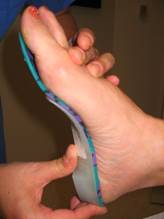
Figure 2: As seen here, orthotics for hallux rigidus should conform closely to the arch of the foot.
Foot Orthotics for Hallux Rigidus
The correct custom made orthotic can reduce or eliminate your pain by eliminating painful motion. Depending on the degree of joint damage that has already occurred, orthotics might have one of two functions:
1. Patients with less severe arthritis usually do better with orthotics that improve motion of the big toe joint
2. Patients with more severe arthritis usually do better with orthotics that limit motion of the big toe joint.
Usually we can determine the best orthotic prescription by an examination and gait evaluation. Sometimes we need to put some temporary modifications on an orthotic to determine which type provides the best pain relief. Either way, it is a very specific orthotic prescription, based on the best evidence in the medical literature, that allows us to treat the cause of your pain rather than just the symptoms.
With the correctly prescribed orthotic, harmful joint stresses can be reversed, allowing affected tissues to heal and joint function to be improved. In this way the orthotic provides both primary treatment and preventative care by working to restore normal function and range of motion to your big toe.
In order to best improve function of your big toe joints, research has shown that orthotics must be made from non-weightbearing casts of your feet with the foot held in the position that provides the best function of the big toe joint. In addition, the orthotic itself must conform very close to the arch of the foot. This is called a “total-contact orthotic“.
Proper orthotics can be the most effective way to treat big toe pain and prevent surgery. Because hallux rigidus gets worse over time you should not wait to be evaluated. For a complete evaluation of whether orthotics can help your big toe problem, make an appointment today to see us in our Seattle office.
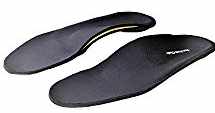
FootChair Adjustable Arch Orthotic
However, if you are not able to obtain a custom orthotic we suggest the FootChair Podiatrist Designed Adjustable Arch Orthotic. This has the best arch height we have found on an over-the-counter arch support to transfer pressure off of the great toe joint due to adjustable arch via pads that can be inserted under the cover.
Shoes and Shoe Modifications for Hallux Rigidus
We will provide you with recommendations for specific shoes that will act to reduce painful forces in the big toe joint. A stiff-soled shoe with a rocker or roller bottom may be recommended to help you walk and lessen the bend in the big toe. A shoe with a wide toe box may also help relieve pain. We can even help you find high heel shoes that work best for patients with big toe pain. Weight loss can also be important in reducing hallux rigidus pain.
Anti-Inflammatory Treatment
This may include ice and anti-inflammatory medications. These may provide some temporary relief and ease the pain of inflammation, but are not helpful in addressing the underlying cause of your condition.
Surgery for Hallux Rigidus
In cases that do not respond to conservative measures, we may recommend surgery. At the Foot and Ankle Center of Washington surgery is always a last resort and we feel it should never be considered unless all conservative treatment has failed (and we are very good at conservative treatment). Sometimes, however, there are times where it is necessary for pain relief.
There are two primary types of surgery for hallux rigidus:
- Joint preserving surgery: When the cartilage of the joint is still in pretty good shape surgery is focused on improving function of the joint in order to provide pain relief. In this situation the joint itself is left intact.
- Joint destructive procedures: When the cartilage is severely damaged (severe arthritis of the joint) then the joint itself cannot be saved. It is either fused, removed or replaced.
Joint Preserving Procedures
Removal of Bone Spurs (Cheilectomy of the Big Toe Joint)
For joints with minor arthritic changes a procedure called a “cheilectomy” can be performed. In a cheilectomy, the bone spurs around the joint are removed in an attempt to allow more normal motion of the joint. This procedure works best if the bone spurs are blocking motion, but the joint surface is still in good shape.
Decompression of the Big Toe Joint
For patients with moderate big toe joint arthritis the cheilectomy can be combined with a “joint decompression”. This means that the first metatarsal bone is shortened a little bit to essentially put more slack into the big toe joint in an effort to improve motion in the joint.
Joint Destructive Procedures
Big Toe Joint Fusion
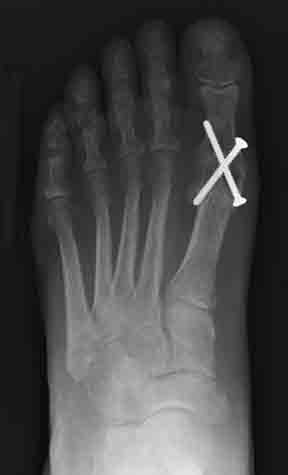
Joint fusions are used for big toe joints with severe arthritis. Fusion of the joint sounds drastic, but in fact this surgery is usually done only on joints where there is very little motion left and the motion that is present causes a lot of pain. This surgery has been performed for decades and historically has excellent outcomes. There is a tremendous amount of evidence in the medical literature that it is the preferred surgical option for a majority of patients with significant arthritis of the big toe joint.
Interpositional Arthoplasty (Removal of the Joint)
For patients with severe arthritis in the big toe joint, an alternative to fusion of the joint is to perform a procedure that prevents the bad surfaces of the big toe joint from rubbing together. In this procedure the bad carilege and a small amount of bone are removed. The space that is created is then filled with some tissue from the ligaments surrounding the joint.
Compared to the fusion procedure, the advantages of this procedure is that it helps maintain motion in the joint. This procedure has significant disadvantages compared to a fusion procedure. Elevation of the toe and continued pain are common complications. However, this is sometimes an option in an older patient. Your surgeon will review the advantages and disadvantages of this procedure with you in detail.
Big Toe Joint Replacement
Just as with knees and hips there are artificial joints available for treatment of severe arthritis of the big toe joint. Twenty years ago joint replacements were a common method of treating severe arthritis of the big toe joint. Unfortunately, the small surface area of this joint leads to great forces through the joint and artificial big toe joints have a tendency to wear out in just a few years and have not been proven to be as effective as artificial knees and hips. Long term studies have not shown this surgery to have as good of an outcome for patients as joint fusion.
These procedures are not without risks and, except for fusion, the disease often continues to progress after a temporary period of pain relief. Also, operative measures performed on one foot may cause problems on the other foot due to the extra load. We will provide you with complete and detailed information so that you can make an informed decision.
Don’t let your big toe pain get worse. Early treatment can prevent future problems. Call today for an appointment in our Seattle office.
