




Ankle Instability, Unstable Ankles and Slow Healing Ankle Sprains
 If you have ever sprained an ankle, you are at risk of developing a condition called “chronic ankle instability.” Those with chronic ankle instability are prone to repeated ankle sprains and/or the feeling that their ankle is “giving away.” This is very serious because, each time you sprain your ankle, you increase the chances of ankle arthritis later in life as well as the risk of a re-sprain.
You should make an appointment to see us in our Seattle foot and ankle clinic right away if any of the following apply:
- You have unstable ankles
- You occasionally twist or turn your ankle
- You feel like your ankle gives way
- You are prone to falls due to a lack of control of your ankles
- You have had more than one ankle sprain
Chronic ankle instability can be successfully treated through conservative measures. There are many studies that demonstrate the most effective ways to treat this condition and we have developed successful evidence-based protocols to treat unstable ankles based on this research.
Video: Slow Healing Ankle Sprains and Ankle Instability Treatment Options
What Is a Slow Healing Ankle Sprain?
If you had an ankle sprain that isn’t healing as fast as you think it should – or if your ankle gives way – the most common cause is lateral ankle instability. Most of our patients with this problem don’t come to see us until several months after their ankle sprain. However, the sooner you come see us, the faster we can get you back to full activity. If you sprained your ankle and have residual pain, no matter how long it has been, make an appointment to see us right away.
What Are Weak Ankles?
Weak ankles (those that turn, roll or twist for no reason) are a common problem that should always be treated. Research over the past decade has shown that weak ankles can be treated conservatively and that surgery is almost never necessary.
What Is the Treatment for Unstable Ankles, Weak Ankles and Slow Healing Sprains?
The three most important aspects of treatment for unstable or weak ankles or slow healing sprains are:
- Protection: We’ll prescribe the use of ankle braces to protect your ankle until you develop adequate strength and balance to prevent re-injuring your ankle. As your strength and balance improve, we will let you know when you can stop using the braces.
- Improve balance: Traditionally, treatment focused on strengthening the ankle. However, research shows that it is much more important to focus on improving balance rather than strength. You’ll be put on a program to improve balance, especially on the injured side.
- Custom foot orthotics: Multiple studies indicate that chronic ankle instability decreases substantially with the use of custom foot orthotics. A 2002 study tested people with chronic ankle instability and found a significant increase in ankle stability through use of an orthotic.
What If I Can’t Wear an Ankle Brace?
Some patients cannot wear an ankle brace throughout their entire treatment. If you cannot wear a brace, taping can also provide adequate support. The video below shows the best taping technique for ankle instability.
Video: Taping for Ankle Instability
You can purchase Rocktape here. 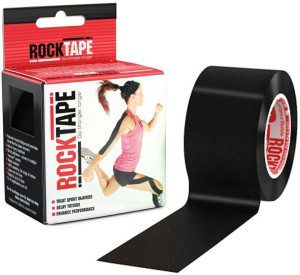
What Can I Expect at my Consultation?
We can usually address chronic ankle instability through conservative treatment so surgery is rarely needed. When we treat patients with weak ankles and chronic ankle instability, we develop a comprehensive treatment program, and will usually:
- Run several tests to evaluate the extent of ankle instability and weakness
- Recommend proper protection for the ankle during the healing and rehabilitation process
- Design a therapy program with a special focus on improving balance on the injured ankle
- Prescribe specialized custom orthotics designed specifically to reduce ankle instability and prevent future ankle sprains
Home Treatment for Unstable Ankles
This is a condition that should be treated professionally to prevent long-term ankle damage, but until you come in for your consultation you must protect your ankle and prevent further sprains.
These are the products we recommend to our patients and they are also affiliate links so we may receive a small commission at no additional cost to you if you decide to make a purchase through our links. Please read our disclosure for more info.
Stabilize Your Ankle
Patients with lateral ankle instability should wear an ankle brace at all times when weightbearing for the first 30 – 60 days after the injury and until a doctor is  seen. We recommend wearing the Ossur Exoform Ankle Brace. This is the most stable over-the-counter brace we have found and it fits well in most shoes.
If you can’t wear an ankle brace (for example in women’s dress shoes that are too small to hold an ankle brace) then follow the instructions above for taping the ankle. We recommend Rocktape or another kinesiology tape as they provide great support but are gentle on your skin.
Strengthen Your Ankle
Once we have ensured that there is no other damage to the ankle we will start patients on an ankle strengthening program. This is the one time of day that an ankle brace is not worn.
If you have unstable ankles, occasionally twist your ankle, turn your ankle, feel like your ankle gives way, or are prone to falls due to a lack of control of your ankles, you should make an appointment to see us in our Seattle office right away. We can offer help even if you have been spraining your ankle for years.
See an Ankle Specialist for a Complete Evaluation
If you are in the Seattle area, call (206) 344-3808 or schedule online in our patient portal. The Foot and Ankle Center of Washington is conveniently located in downtown Seattle near Swedish Medical Center right off I-5. If you are not in our area then find a sports medicine foot and ankle doctor in your area.
Ankle Stabilization Surgery
On rare occasions surgery is necessary to stabilize the ankle and prevent recurrent sprains. We strongly feel that surgery should be only a last resort. You can learn about ankle stabilization surgery here.
Medical References for Ankle Instability:
J Munn, et al, “Eccentric Muscle Strength in Functional Ankle Instability,” Medicine & Science in Sports & Exercise, 35 (2003): 245.
LC Orteza, WD Vogelbach, et al, “The effect of molded and unmolded orthotics on balance and pain while jogging following inversion ankle sprain,” Journal of Athletic Training, 27 (1992): 80.
DT Ochsendorf, et al, “Effect of orthotics on postural sway after fatigue of the plantar fascia and dorsiflexors,” Journal of Athletic Training 35 (2000): 26.
KM Guskiewicz, DH Perrin, “Effect of orthotics on postural sway following inversion ankle sprain,” Journal of Orthopaedic and Sports Physical Therapy, 23 (1996): 326.
