




Weight Gain Can Cause Foot Pain – Even When It’s Just A Few Extra Pounds
As Americans get heavier, they are crushing their feet. Many studies have clearly linked foot and ankle problems to an individual’s weight and body mass index (BMI is a calculation of your weight based on your height). Individuals with a higher BMI have a significant increase in foot and ankle problems. And the additional weight doesn’t have to be substantial to have an impact. One study found that a gain of even 5-10 pounds can trigger foot problems.
Video: Weight Loss and Your Feet
While problems vary from patient to patient, foot and ankle pain often occurs in weight bearing areas, as well as in the tendons and ligaments because additional weight changes the way the foot functions.
Carrying extra body weight can greatly increase pressure on the bottom of the foot, flatten the foot, shorten your gait and lead to your feet angling out more.
Common foot problems associated with weight gain include posterior tibial tendonitis, plantar fasciitis, arthritis, ball-of-foot pain, fractures and sprains of the feet and ankles. Extra weight can damage the joints of the foot and ankle. What’s even more troubling is that foot and ankle pain can lead to further weight gain because it makes exercise more difficult and painful. Addressing foot pain caused by greater than average body weight is a great starting point to shedding extra pounds.
If you are trying to lose weight and are experiencing foot, leg or knee pain, contact us for an appointment in our Seattle clinic or follow the self-treatment suggestions below.
Foot And Ankle Pain Relief Solutions For Those Carrying Extra Weight
When climbing up stairs or walking on an incline, we carry approximately four to six times our body weight across the ankle joint. Extra body weight significantly increases the impact. At the Foot and Ankle Center, we have developed special treatment protocols for those who are carrying excess weight. In almost every situation we can relieve your foot and ankle pain so that you can walk and exercise in comfort which can make it easier to shed excess body weight.
Our experts will evaluate how you walk and where you are putting excess force on your feet. There is simply much more force on your feet and tension on your plantar fascia when you are overweight, so more advanced heel pain treatments may be necessary. We take all this into consideration when developing a treatment plan for your heel pain symptoms.
Treatment plans may include:
- Shoe recommendations
- Custom foot orthotics
- Specific strengthening and stretching exercises
- Anti-inflammatory medication
If you are starting a weight loss program, we also will often refer to:
- Your primary care physician
- A registered dietitian
- A personal trainer or physical therapist to work on an exercise regimen
Custom Foot Orthotics If You’re Carrying Extra Weight
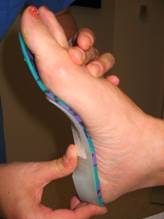
Figure 1: Note how closely orthotic matches contour of foot.
Foot orthotics can minimize abnormal force on the feet and can treat and prevent foot problems if you’re carrying excess weight and/or trying to lose weight. A relatively firm and controlling foot orthotic is necessary to support the greater forces caused by carrying extra weight. In addition, the orthotic must provide shock absorption to decrease the excessive stress on the joints and help prevent arthritis. The orthotic arch must perfectly match the arch of your foot to provide adequate support. Finally, the orthotic must be extremely comfortable. Read more here about the best orthotics for those carrying extra weight.
Prefabricated Orthotics for Those Carrying Extra Weight
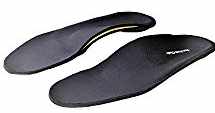
FootChair – our recommended arch support for those carrying extra weight
Dr. Hale and Dr. Huppin of the Foot and Ankle Center of Washington are experts in ensuring your custom orthotics will provide adequate support and are 100% comfortable – guaranteed.
Although prefabricated orthotics are an option, if you’re carrying excess weight, custom orthotics usually offer the best pain relief. Prefabricated orthotics simply are too often too flexible or not high enough in the arch to support those carrying extra weight.
But if you cannot come into our Seattle office for an evaluation right away, you can try a pair prefabricated arch supports such as FootChair Podiatrist Designed Orthotic to provide your feet with some support right away even if it’s not the optimal solution.
We like the FootChair Orthotic for full size shoes because it is the only prefabricated orthotic we have found that accommodates the extra width that is usually found in the feet of those who are overweight and has an adjustable arch to provide the most support while still being comfortable. That extra width and arch support provides significantly more support and, subsequently, pain relief.
If you need a prefabricated orthotic for a smaller shoe such as high heels, flats or soccer cleats FootChair makes a much slimmer profile 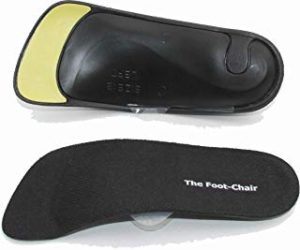 orthotic called the FootChair Slim Orthotic. It will fit in most types of smaller shoes and even flexes to fit into high heels. Like the full size FootChair, it has the unique adjustable arch height.
Heel Pain is Extremely Common in Overweight and Obese People – We Can Help
If you are in the Seattle metro area, make an appointment to see us at the Foot and Ankle Center’s Seattle Heel Pain Center right away. If you are not local, try our heel pain home remedies for a few weeks. If you see no improvement, see a podiatrist in your area who specializes in heel pain. If you are overweight and suffering from heel pain, we understand that foot pain can interrupt your weight loss goals. We can help you eliminate the pain and get your life back in motion.
Standard Treatments Are Often Unsuccessful
If you’re carrying extra weight and suffering heel pain, it’s important to know that standard heel pain treatments may not be as effective for you. For example, a thin person with heel pain could decrease activity for a couple days and see a major improvement. This is not so if you’re carrying extra weight. Carrying too much weight means excess force prevents the fat pad from providing adequate cushion.
Because of this, the plantar fascia is much more easily injured. Simply walking to the mailbox or your car can put too much tension on your plantar fascia. But being overweight does not mean you have to live with heel pain and we can help. It is critical for anyone who is carrying extra weight to have heel pain treated immediately. The longer you let it go, the worse it gets.
Best Walking Shoes if You are Overweight
If you are carrying extra weight you need walking shoes that provide extra support so that you can be active and lose the weight. The shoes should have a stable heel and not twist easily. A stable shoe will go a long way toward reducing the forces that cause foot pain and will also allow you to exercise longer without injury. Keep in mind that no shoe works for everyone, but the shoes below will work for most people and provide great support. Here are some of our favorite shoes for those carrying too much weight:
Best walking/running shoe for men over 225 pounds – Brooks Beast : The overall best walking and exercise shoe for men over 250 pounds is the Brooks Beast. This is an extra supportive 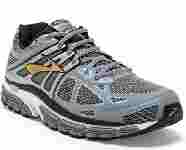 shoe that is cut so that it is easy to use arch supports and orthotics in it. The Beast come in multiple widths so they fit most people. When we gain weight we gain it in our feet also so many people who are overweight are more comfortable wearing a wide width shoe. You can see the Brooks Beast here.
Best walking/running shoe for women over 225 pounds – Brooks Ariel: The Brooks Ariel is the women’s version of the Beast. It is an excellent walking and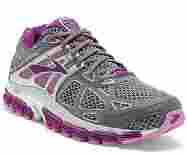 running shoe that will help prevent excessive pronation that leads to foot pain and injury. You can see the Brooks Ariel here.
Best walking/running shoe up to 225 pounds – Brooks Addiction: Brooks has made a commitment to making great shoes for 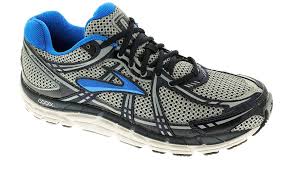 those needing extra support and so Brooks shoes continue to top our list. If you are carrying extra weight and weigh up to 225 pounds, then the Brooks Addition (for women and men) is just a slightly lighter weight version of the Brooks Beast and Ariel. Also the Addiction comes in both models for running and for walking. They are really the same shoe but the walking version is made of leather. Either one, however, will work great as a walking shoe. You can see the Brooks Addiction here.
Diet and Nutritional Counseling for Better Foot Health
Why is a podiatrist recommending diet counseling? In fact, counseling regarding diet is a critical aspect of treating many foot problems. Most commonly we refer for diet and nutrition counseling regarding issues of patients who are overweight or obese. Carrying extra weight can be extremely damaging to feet and losing weight is a critical aspect of treating many foot problems. There is a lot we can do to help your feet feel better so that you can exercise to help weight loss, but most studies show that proper diet and nutrition is a more important aspect of weight loss than is exercise. In fact, 75% of weight loss has to do with diet and 25% with exercise.
Even people who think they know how to eat properly usually find that time spent with a registered dietitian is extremely valuable.
Because of the strong relationship between foot and ankle problems and weight, we often refer our patients to registered dieticians (RD). Below you will find recommendations for RDs in the Seattle area.
Should you see a registered dietitian or a nutritionist?
We suggest you see a Registered Dietitian. A RD has completed at least a Bachelor’s degree in nutrition or a related field and has gone through an internship in a health care facility. Following internship, they must take a certifying examination before they can obtain a license as a registered dietitian. RD’s must pursue continuing education to remain licensed.
Nutritionists do not need to go through the internship or exam process. Many nutritionists have a degree in Nutrition, but some do not. Also, some RDs may call themselves “nutritionists,” but not all nutritionists are registered dietitians.
Will insurance cover diet and nutrition counseling?
Most insurance companies cover individual nutritional counseling. For those without medical insurance, many of the RDs listed below have payment plans and sliding scales.
Seattle Area Registered Dietitians and Weight Loss Counseling
- Swedish Nutrition Clinics in Ballard, Edmonds, Issaquah and First Hill in Seattle
- Food/Sense in Burien (Danielle VenHuizen, MS, RD)
- FitFirst in North Seattle (Jess Mullen, RD)
- Crave Health in Kirkland (Ashley Besecker, RD, CD)
Seattle Dietitians: We are looking for more dietitians to add to our referral list. We like to meet first to discuss patient care. If you are interested, please contact Dr. Larry Huppin so we can set up a time to meet
Best Seattle Weight Loss Programs
It can be very beneficial to work with a weight loss program. You should look for a program that has a “team approach” – meaning that you will work with several different providers in different specialties in order have a complete program. These specialties might include a primary care provider, registered dietitian, exercise specialist, podiatrist and a weight-loss psychologist.
Non Surgical Weight Loss Programs
We believe that you should focus first on medical, rather than surgical weight loss. If that fails you may want to consider speaking with a surgical weight loss specialist.
SEATTLE AND NORTH
Our recommendation in the Seattle and North Sound regions for weight loss are the Swedish Non-Surgical Weight Loss Clinics. This is the only comprehensive program in the area that we have found with a focus on non-surgical weight loss.
The Non Surgical Weight Loss program is offered at Swedish on First Hill in Seattle and in Edmonds.
SOUTH OF SEATTLE
Multicare Center for Weight Loss and Wellness offers a medical weight loss program in Tacoma, Gig Harbor, Olympia and Puyallup.
Even if you are considering bariatric surgery in the future, participating in a medically supervised weight loss program prior to weight-loss surgery can make the surgery easier and more effective.
If you will joining a weight loss program, make an appointment to see us as soon as possible so that we can help prevent foot pain that often occurs during weight loss exercise.
We are looking for other evidence-based and medically supervised weight loss programs to add to our referral list. If you are involved in such a program, please contact us.
Exercise for Weight Loss
Exercise is critical for both weight loss and your overall health. If you are overweight be sure to discuss exercise plans with your doctor before starting an exercise program. Then contact us for an appointment so we can help you protect your feet when you workout.
Best Weight Loss Exercise Video Programs
Jillian Michaels Body Revolution is a 90 day weight loss exercise program focused on helping people lose weight. Designed by Jillian Michaels of 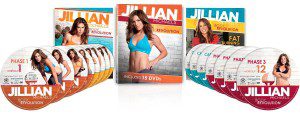 NBCs Biggest Loser program, it is a series of 30 minute workouts on 15 DVDs. The workouts start out very low impact and increase in intensity as you lose weight. Be sure to get your doctor’s ok to start an exercise program first.
And, if you have your doctor’s ok, here is a completely free and very well done beginning workout for those who have a lot of weight to lose. This one is by Tony Horton of P90X fame:
Video: Tony Horton Weight Loss Workout
Exercising When Your Feet Hurt
Carrying extra weight can cause foot pain which can make it difficult to exercise. We can help resolve your foot pain, but if you can’t see us right away, we have developed a guide to how to exercise when your feet hurt. Just use the link to find many exercises that you can do even when your feet hurt.
Don’t Delay Seeking Treatment for Your Foot Pain if You’re Carrying Extra Weight
Call today for an appointment at the Foot and Ankle Center of Washington.
References: Obesity and Foot Pain
- Plantar pressure differences between obese and non-obese adults: a biomechanical analysis. Hills AP, Hennig EM, McDonald M, Bar-Or O.Int J Obes Relat Metab Disord. 2001 Nov;25(11):1674-9.
- Comparison of static footprints and pedobarography in obese and non-obese children. Taisa Filippin N, de Almeida Bacarin T, Lobo da Costa PH. Foot Ankle Int. 2008 Nov;29(11):1141-4.
- Why is obesity associated with osteoarthritis? Insights from mouse models of obesity. Griffin TM, Guilak F. Biorheology. 2008;45(3-4):387-98.
- Assessment of the medial longitudinal arch in children and adolescents with obesity: footprints and radiographic study. Villarroya MA, Esquivel JM, Tomás C, Moreno LA, Buenafé A, Bueno G Eur J Pediatr. 2008 Aug 27.
- Does obesity influence foot structure and plantar pressure patterns in prepubescent children?; Dowling,et. al; 2001; Int J Obes Relat Metab Disord
- Computerized baropodometry in obese patients; Fabris, et. al. Obes Surg. 2006
Click Here For Self Treatment Hints
