




How Foot Function Can Affect Runners Knee, Knee Arthritis and ACL Injuries
Causes of knee pain
There are many causes of knee pain. Some of the more common ones include patellofemoral pain syndrome, arthritis, injury to ligaments, cartilage (meniscus) tears, tendonitis and bursitis. Some of the causes of these problems include direct injury, obesity, wear and tear over many years and abnormal foot function.
How Some Knee Pain is Related to Foot Function
Abnormal foot function can cause several types of knee pain. Your feet are the foundation for every step you take. Problems with the function of your feet can have repercus¬sions that are felt all the way up, including your knees, back and hips.
In studies of knee pain and foot function, excessive flattening of the feet (pronation) is the foot problem most often mentioned in the literature as being associated with knee pain This occurs because pronation of the foot causes the knee to rotate inwards so that it is forced to function in an abnormal position.
Orthotics for Knee Pain, Knee Arthritis and ACL Injury
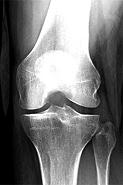
Normal Knee
Foot orthotics have been shown to be an effective therapy in treating and preventing some types of knee pain. These include runners knee, knee arthritis and they may also possibly play a role in preventing ACL injury. If you have knee pain and want to find out if it is related to your foot function, make an appointment to see us in our Seattle foot and ankle clinic.
Below we review the three knee problems where studies have demonstrated that foot orthoses are most likely to provide a good outcome. It is important to realize that although many studies have shown that orthotics CAN help SOME patients with these problems, that by no means do orthotics help all patients with these problems.
Sometimes orthotics are a critial treatment for these problems, sometimes they are an adjunct to other treatments and sometimes they do not help at all. We can help you determine if orthotics might be a good choice for your knee pain.
Orthotics for Runners Knee (Patello-femoral Dysfunction)
Runners knee is a condition that is caused by the knee cap being pulled out of place. A number of studies have shown that when the foot pronates (flattens) excessively, it causes the leg to rotate inward and the knee cap to pulled off-line.
Studies have also shown that when orthotics are used to stop the flattening of the foot and subsequent rotation of the lower leg, that runners knee pain decreases. In fact, a 2003 study by Gross showed a 67% decrease in knee pain using a custom orthotic.
A 2001 study by Johnson showed that pain was reduced within 2 weeks. A 2003 study of over 100 runners with patellofemoral pain found that 76.5% of patients had a significant decrease in knee pain with the use of custom orthotic devices.
In a 2003 study of 102 athletic patients with patellofemoral pain syndrome, 76.5% of patients improved after 2-4 weeks of receiving the custom foot orthoses.6 A 2004 study showed significant improvement of patella-femoral pain with the use of foot orthoses.5
Orthotics for runners knee should be made specifically to reduce rotation of the lower leg. In figure 2, the leg on the right in rotating inward. This acts to pull the knee cap off line and can lead to runners knee. A foot orthotic that prevents the foot from flattening and the leg from rolling in, as in the picture on the left, will keep the knee cap in alignment. The best orthotic to accomplish this can vary based on each patient’s specific biomechanics, but usually the best orthotic is one that conforms very close to the arch of the foot, is the full width of the foot, does not collapse with weightbearing but also provides adequate cushion.
Orthotics for Knee Pain Due to Arthritis
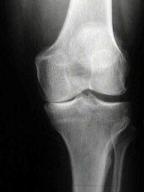
Medial Osteoarthritis
Several studies have shown that very specialized foot orthotics can be helpful to reduce pain in patients who suffer from arthritis of the knee. More specifically, these studies show that orthotics can help patients with osteoarthritis of the medial compartment of the knee. The knee is made up of two compartments, the medial (closest to the other leg) and lateral (outside of the leg).
Studies have shown that using custom orthotics with special “valgus” or “lateral” wedges added to them can reduce pain and pressure in the medial compartment of the knee. Dr. Hale and Dr. Huppin are experts at designing orthotics for patients with medial knee osteoarthritis.
Studies in 1997, 2002 and 2004 showed a strong scientific basis that custom orthotics with specific types of wedging are effective in reducing pain in persons with medial knee osteoarthritis.1-3 In a 2005 study of 30 persons with medial knee osteoarthritis, subjects were given foot orthoses with a 5 degree lateral wedge. At 6 weeks, all subjects had some relief and 28 found the orthoses comfortable.3
When Do Orthotics Work and When Do They Not Work to Reduce Arthritis Knee Pain?
- Studies show that orthotics work best to reduce pain in cases of arthritis affecting the medial (inside) knee. They do not help in every case but can be quite effective at reducing pain.
- Some patients, however, see no relief and a small number have increased pain and cannot wear orthotics.
- Orthotics for medial knee pain are extremely specialized and standard foot orthotics can actually make medial knee pain worse.
- Adjustments are often necessary to achieve best results. Be absolutely certain that whoever makes your orthotics is a specialist in biomechanics and orthotic therapy.
- Orthotics do not effectively relieve knee pain in cases where there is arthritis in both the lateral and medial compartment of the knee. In fact, they may increase pain.
- Orthotics may be helpful in some cases of lateral knee arthritis – but there have been no studies done that demonstrate this. Orthotics for this problem require a different type of wedging then those for medial knee pain. Lateral osteoarthritis is less common than medial.
- Although they may decrease pain, there is no evidence that orthoses slow the progression of osteoarthritis of the knee.
If you have knee arthritis and have not yet had it evaluated by your primary physician, orthopedist, rheumatologist or physiatrist, we will refer you to the appropriate doctor. Orthotics can be a good tool for helping reduce knee arthritis pain in some patients as part of an overall treatment plan.
Orthotics to Prevent ACL Injury
There is evidence in the medical literature that using custom orthotics can reduce the chance of injury to the anterior cruciate ligament of the knee.
A very interesting study of a women’s college basketball team was conducted over a 13 year period and published in 2008. In phase one of the study, which lasted four years, the team did not use foot orthotics.
Then in phase two, for the next nine years, every member of the team was given foot orthotics. When the study authors crunched the numbers on knee ligament injuries, they found that ACL injuries were 7.14 times more likely for players who were not wearing foot orthoses.
In addition to the 2008 publication, a number of studies have shown that as the foot pronates (flattens), the leg rotates in toward the other leg. As this occurs, it increases tension on the ACL which leads to an increased chance of injury.
Who Needs Orthotics to Prevent ACL Injuries?
Certainly we don’t think everyone needs to wear orthotics to prevent ACL injuries. Given the results of this study, it does make sense that anyone with a history of ACL injury should wear orthotics. Also, women are much more likely to injure their ACL, so women who participate in sports that have a high number of ACL injuries (basketball, soccer, etc) may wish to wear foot orthotics as a preventative measure – in particular, women who have feet that pronate excessively.
What Kind of Orthotics Can Prevent ACL Injuries?
Our goal when prescribing orthotics to prevent ACL injury is to limit rotation of the leg to reduce tension on the ACL ligament. In order to do this, we must limit foot pronation as much as possible. This requires a very specialized orthosis. We usually recommend a total contact orthotic with multiple features designed to increase control.
Knee Pain Treatment Options Besides Orthotics
Treatment for knee pain is as varied as the number of causes. It is very important that you understand the cause of your symptoms before undergoing treatment for your knee pain. Our first job is to determine if your foot function may be contributing to your knee pain. We determine this through an evaluation and by possibly making you a temporary orthotic to determine how it affects your pain. If we feel that your knee pain is not related to foot function, we will refer you to an appropriate specialist for other treatment options.
What type of orthotics work best for knee pain?
Research studies have shown that the best orthotic prescription varies depending on what type of knee problem you are experiencing. A person with pain on the inside of the knee needs a very different orthotic than someone experiencing pain on the outside of the knee.1-6 In addition, orthotics for knee pain often require adjustments after the patient has worn them for a few weeks. For most knee problems, but not all, orthotics should conform very close to the arch of your feet (Total Contact Foot Orthotics). All of this is why it is absolutely critical that anyone who is prescribing orthotics for you be an expert in casting, prescribing and troubleshooting foot orthotics. Both Dr. Huppin and Dr. Hale are experts in orthotic therapy and our practice is a referral center for patients needing state-of-the-art biomechanical treatment.
If you are experiencing knee pain and want to find out if treating your foot function might help reduce your knee pain, then call today for an appointment in our Seattle clinic.
What You Should Bring to Your Appointment
If you have knee x-rays showing the extent of any arthritis, it would be helpful to bring those with you to your appointment. If you do not yet have xrays of your knees you many need to get them before orthotics are made. If you have arthritis of both compartments of the knee, we want to know that ahead of time as those patients may not tolerate foot orthotics well.
- Bring a pair of shorts or pants that you can roll up above the level of your knee.
- We will likely perform an analysis of your gait (how you walk), your foot function and your knee.
- Following the exam we will explain whether it is likely that orthotics will help your knee pain.
- If orthotics are prescribed, once you receive them, know that it may take several visits to wedge the orthotics in a way that best decreases your pain.
Video: How Foot Pronation Affects Knee Function
Medical Studies Regarding the Use of Foot Orthotics in Treatment of Knee Pain
- Kerrigan DC, Arch Phys Med Rehabil. 2002 Jul;83(7):889-93. Effectiveness of a lateral-wedge insole on knee varus torque in patients with knee osteoarthritis.
- Marks R, Penton L Are foot orthotics efficacious for treating painful medial compartment knee osteoarthritis? A review of the literature. Int J Clin Pract. 2004 Jan;58(1):49-57.
- Ogata K, Int Orthop. The effect of wedged insoles on the thrust of osteoarthritic knees. 1997;21(5):308-12.
- Russel Rubin and Hylton B. Menz. Use of Laterally Wedged Custom Foot Orthoses to Reduce Pain Associated with Medial Knee Osteoarthritis: A Preliminary Investigation. J Am Podiatr Med Assoc 2005 95: 347-352.
- Johnston LB, Effects of foot orthoses on quality of life for individuals with patellofemoral pain syndrome. J Orthop Sports Phys Ther. 2004 Aug;34(8):440-8.
- Gross MT, Foxworth JL. The role of foot orthoses as an intervention for patellofemoral pain. J Orthop Sports Phys Ther. 2003 Nov;33(11):661-70. Review.
- Saxena A1, Haddad J. The effect of foot orthoses on patellofemoral pain syndrome. J Am Podiatr Med Assoc. 2003 Jul-Aug;93(4):264-71.
- 7JR Franz, J Dicharry, PO Riley, “The influence of arch supports on knee torques relevant to knee osteoarthritis,” Medicine & Science in Sports & Exercise, 40(5) (May 2008): 913-7.
- WL Jenkins, SG Raedeke, DSB Williams III, “The relationship between the use of foot orthoses and knee ligament injury in female collegiate basketball players,” Journal of the American Podiatric Medical Association, Vol 98, No3 (May-June 2008).
- ME Beckett, DL Massie, KD Bowers, et al, “Incidence of hyperpronation in the ACL injured knee: a clinical perspective,” Journal of Athletic Training, 27 (1992): 58.
- JK Loudon, WL Jenkins, KL Loudon, “The relationship between static posture and ACL injury in female athletes,” Journal of Orthopedic & Sports Physical Therapy, 24 (1996): 91.
- B Woodford-Rogers, L Cyphert, CR Denegar, “Risk factors for anterior cruciate ligament injury in high school and college athletes,” Journal of Athletic Training, 29 (1994): 343.
- CL MacLean, IS Davis, J Hamill, “Short- and long-term influences of a custom foot orthotic intervention on lower extremity dynamics,” Clinical Journal of Sports Medicine, 18(4) (July 2008): 338-43. This one is also referenced on another consolidated page above.
- RJ Butler, S Marchesi, T Royer, IS Davis, “The effect of a subject-specific amount of lateral wedge on knee mechanics in patients with medial knee osteoarthritis,” Journal of Orthopedic Research, 25(9) (Sept 2007): 1121-7.
- R Rubin, HB Menz, “Use of laterally wedged custom foot orthoses to reduce pain associated with medial knee osteoarthritis: a preliminary investigation,” Journal of the American Podiatric Medical Association, 95(4) (July-Aug 2005): 347-352.
- JF Maillefert, C Hudry, G Baron, P Kieffert, P Bourgeois, D Lechevalier, et al, “Laterally elevated wedged insoles in the treatment of medial compartment osteoarthritis: a prospective randomized controlled trial Osteoarthritis and Cartilage,” OARS Osteoarthritis Research Society, (2001).
- T Pham, JF Maillefert, C Hudry, P Kieffert, D Lechevalier, M Dougados, “Laterally elevated wedged insoles in the treatment of medial knee osteoarthritis,” Osteoarthritis and Cartilage, 12(1) (2004): 46–55.
- M McCulloch, “The effect of foot orthotics and gait velocity on lower limb kinematics and temporal events of stance,” Journal of Orthopedic & Sports Physical Therapy, 17 (1993): 2-10.
- I McClay, “The evolution of the study of the mechanics of running. Relationship to injury,” Journal of the American Podiatric Medical Association, Vol 90 (2000): 133-148.
- Y Toda, N Segal, A Kato, S Yamamoto, M Irie, “Effect of a novel insole on the subtalar joint of patients with medial compartment osteoarthritis of the knee,” The Journal of Rheumatology, (2001).
- Y Toda, N Tsukimura, “A 2-year followup of a study to compare the efficiency of lateral wedged insoles with subtalar strapping and in-shoe lateral wedged insoles in patients with varus deformity osteoarthritis of the knee,” Osteoarthritis and Cartilage, (2006).
- K Baker, J Goggins, H Xie, K Szumowski, M LaValley, D Hunter, et al, “A randomized crossover trial of a wedged insole for treatment of knee osteoarthritis,” Arthritis and Rheumatism, (2007).
