




Home Treatment Remedies for Cracked Heels
Cracked Heels are a common foot problem also referred to as ‘heel fissures’. They can really be a problem as they can cause pain and discomfort. Cracked heels are commonly caused by dry skin (xerosis). The symptoms are worse when the skin around the rim of the heel is thick (callus).
You can find home treatments for cracked heels below.
If you have cracked heels that are not relieved by the suggestions on this page, call 206.344.3808 or use our Patient Portal. We can provide you with conservative treatment options that will relieve your pain.
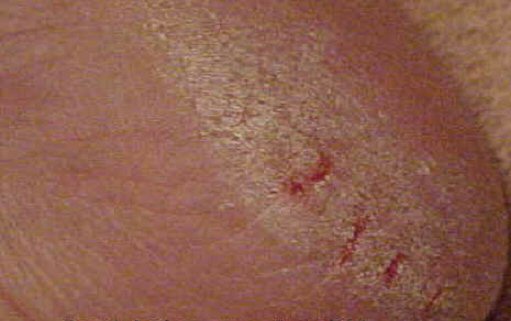
Figure 1 – Heel fissures (Cracked Heels)
Why Do Dry, Cracked Heel Hurt?
Callus is simply a build up of skin that forms in response to irritation or friction, for example where a shoe repeatedly rubs against one part of the foot. Callus can be thick or thin and forms in many shapes and patterns. Thickening Callous can be a cosmetic problem when it forms on the heel
Cracks or fissures that occur within the Callous can be more serious and if left untreated and may become deep, painful, infected and begin to bleed. Heel fissure are found at the junction of two types of skin; the skin of the bottom of the foot and the skin of the side of the foot. Heel fissures can be limited to just one side of the heel or wrap around the entire heel.
Causes of Cracked Heels
In some cases a person may have naturally dry skin that increases the risk of Cracked Heels. Callous that forms around the heel is prone to cracking due to mechanical factors that increase pressures in that area e.g the way a person walks.
Other factors that can be involved in the cause of Cracked Heels include:
- Prolonged standing at work or home, especially on hard floors.
- Being overweight – this increases the pressure on the normal fat pad under the heel, causing it to expand sideways. If the skin is not supple and flexible, the pressures may cause the skin to crack.
- Open-back on shoes. This allows the fat under the heel to expand sideways and the pressure may cause the skin to crack.
- Certain medical conditions cause the skin to become dry and cracked eg diabetes or an underactive thyroid.
- Skin conditions such as psoriasis and eczema.
We Are Experts at Treating Cracked Heels
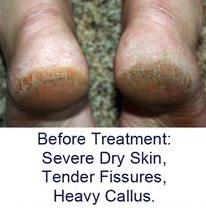 If you have cracking heels or dry skin, make an appointment to see us in our Seattle clinic. Treatment may include:
- Investigation of the cause of the problem, so this can be addressed.
- Removal of the hard thick skin to promote healing.
- Prescription strength creams and special socks that will help to deeply moisturize the area.
- If Cracked Heels are very painful, strapping may be used to ‘hold’ the cracks together during the healing process.
- Advice about footwear and prevention of the problem.
- Orthotics or arch supports may be recommended to alter the way you walk to prevent callous from developing on the heels.
Home Remedies for Cracked Heels and Dry Skin
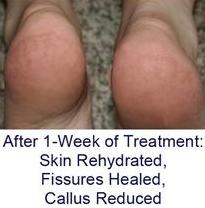 For effective self treatment of cracked heels there are three critical steps:
- Apply a moisturizer before bed at night.
- Trap the moisture in the skin of feet overnight by wearing a special sock that prevents the moisture from evaporating.
- Remove the excess thick skin.
Step-by-Step Instructions to Treat Cracked Heels and Dry Skin on the Feet
Here are step-by-step instructions on how get rid of that cracked skin. Use the following home treatment plan for 3 weeks. First, please read this important disclosure about the products recommended in this article.
If you haven’t seen improvement within 3 weeks, see your podiatrist or dermatologist.
-
- Soak your feet or take a bath or shower before bed,
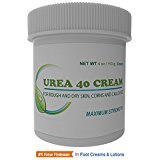
- Apply a deep penetrating exfoliator and moisturizer: We recommend Urea 40% cream to our patients. Urea is an extra-strength
 formula that repairs severely cracked heels and softens even the roughest, driest feet. Urea has the ability to penetrate the very thick skin of the feet and it both exfoliates and moisturizes in one step. For severely dry, rough, cracked heels and feet. Apply after bathing.
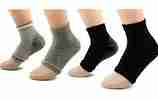
 - Cover the foot with a moisture barrier sock such as these Moisturizing Open Toe Silicone Gel Heel Socks

Wear the sock overnight. The socks will help the Urea penetrate the skin. The socks are lined with a soft polymer fragrance-free gel that comfortably conforms to your feet while gradually releasing medical grade mineral oil to moisturize and lubricate the skin. The gel creates an airtight barrier that allows the Urea to super-hydrate the skin. - Use the moisturizer and sock every night for 2 weeks. Then use them once or twice per week to prevent the return of dry skin and fissures.
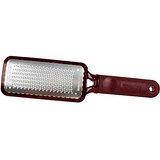
- Remove the dry and thick skin: Remove the dry and thick skin: Every other day for the first two weeks remove some of the
 thick skin. A low cost option is to use a Microplane Foot Rasp. This inexpensive device helps smooth calluses and removes dry skin on heels and toes, without the use of harsh chemicals or dangerous blades.
 -
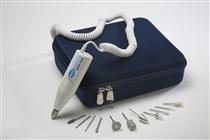
 A more effective way to remove callus is to use an electric rotary tool such as the Beurer Electric Callus, Nail and Foot Care Kit to thin the callus. This professional quality callus and nail thinning tool allows you to thin your nail with a tool used by podiatrists. Four speeds including 10,000 RPM that allows easy thinning of the callus and nails with no vibration. 10 tools including long-lasting diamond burrs are included For perfectly smooth skin, use this tool to grind the callus every week or so. German made. This is by far the best callus thinning tool we have found. There are less expensive ones available, but they don’t have enough power or burr quality to effectively thin the callus. See instructions below.
Instructions for Grinding Callus to Get Smooth Skin:
- Make sure your skin is moist before starting. Take a bath or shower or soak your feet
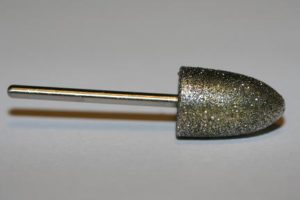
- Use the Large Sapphire Cone Bit (Figure 8) included with PediNova Electric Nail Grinder, to grind the thickened skin on the heel.

Figure 8
- Use gentle pressure and grind it thinner until it is normal thickness and smooth or starts to get warm.
- If it gets warm, stop and then do a little more later or the following day.
- Continue grinding a little each day until the callus is gone and the skin is smooth.
- Follow the moisturizing and other instructions above to prevent return of the thickened heel skin.
Video: How to Use the Pedinova to Treat Heel Callus
Healthy feet allow for regular exercise and a healthier lifestyle.
If you have cracked heels that are not relieved by the suggestions above, call 206.344.3808 or use our Patient Portal. We can provide you with conservative treatment options that will relieve your pain.
