




A Tutorial and Review on Braces for Dropfoot
Drop foot (also known as dropfoot, footdrop and foot drop) is a term that describes a disorder where a patient has a limited ability or inability to raise the foot at the ankle joint. This makes walking difficult as the toes tend to drag on the ground which leads to tripping and instability. Patients adapt to this by using their hip muscles to exaggerate lifting the foot above the ground (known as a “steppage gait”) or by swinging their leg outward so that the foot can clear the ground (known as “circumduction”). More information on the cause of foot drop is available at the end of this page.
If you have drop foot, contact us to make an appointment in our Seattle office. We will work with you to find the best AFO for your condition.
We recommend that you see a medical practitioner if you have dropfoot. But if you cannot see someone and need a dropfoot brace you can find our recommended over-the-counter drop foot braces here.
Disclosure: Please note that some of the links below are affiliate links, and at no additional cost to you, we will earn a commission if you decide to make a purchase. Please understand that we have experience with all of these devices and recommend them to our own patients. We recommend them because they the best we have found for this particular condtion, not because of the small commissions we make if you decide to buy something. Please do not spend any money on these products unless you feel you need them or that they will help you achieve your goals.
Drop Foot Treatment
Drop foot is often treated with the use of braces. The goal of bracing is to provide patients with a more normal and comfortable gait. At the Foot and Ankle Center of Washington we treat dropfoot with several different types of braces (also known as ankle-foot orthotics or AFOs). Our choice of which brace to make depends on each patient’s individual condition. When treating drop foot, AFOs can act in several different ways to help our patients.
To understand how AFOs work, you must first understand two standard motions that occur at the ankle joint – “dorsiflexion” and “plantarflexion”. Plantarflexion is the motion the ankle joint makes when the toes point downward. Dorsiflexion is the motion the ankle joint makes when the foot points upward. This motion needs to occur when the foot comes off the ground so that the patient does not drag their toes. Patients with dropfoot usually have a partial or complete weakness of the muscles that dorsiflex the foot at the ankle joint.
We use several different types of AFOs to treat drop foot in our patients. Some of them are custom and require that we make a mold of your foot, ankle and leg. Others are prefabricated. Our goal is to provide patients with a comfortable AFO that will give them the most normal gait possible.
Review of Dropfoot AFO’s
There are five basic types of AFOs that we can choose for our patients with drop foot:
- Short leg fixed AFOs
- Dorsiflexion assist short leg AFOs
- Solid ankle AFO (with or without posterior stop). Also available with dorsiflexion assist.
- Full leg posterior leaf spring AFO
- Energy return AFOs
Short Leg AFO with Fixed Hinge (doesn’t flex at ankle joint)
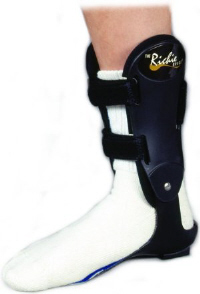 This type of AFO is relatively light and easy to fit into shoes. It offers excellent control of the foot and is a good choice for patients who have dropfoot and also have a very flat foot. This AFO keeps the foot at 90 degrees to the leg. It can also help control unwanted inward rotation of the foot, which can commonly accompany dropfoot in stroke patients and Charcot-Marie Tooth patients.
The disadvantage of this fixed hinge version of this brace, as prescribed for dropfoot, is the fact that it does not allow plantar flexion or dorsiflexion, so it doesn’t provide quite as natural of a gait as do some of the other braces. Also because it is rather short, it doesn’t work as well on taller people. If you are over 6’ tall, we will prescribe a different brace.
Dorsiflexion Assist AFO:
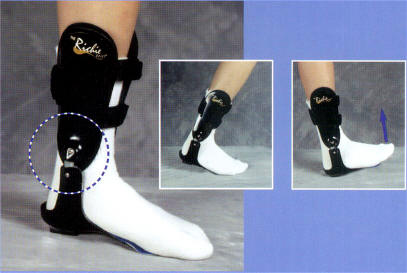
Dorsiflexion assist AFO
This AFO is very similar to the above AFO, but with a spring-like hinge that acts to raise the foot (dorsiflex the ankle) when the foot comes off of the ground. It offers the advantage of a more normal gait pattern. This is one of the best AFOs for patients with mild to moderate dropfoot and a flat or unstable foot. These are known as “Dorsiflexion Assist Functional AFOs”. They allow for a very normal gait in patients with mild to moderate drop foot. It’s limitations are that it won’t work well for patients who weigh over 225 lbs or are over 6’ tall. This brace is shown below.
Plantarflexion Stop AFO:
A “plantarflexion stop” AFO acts to stop plantarflexion by not letting the foot point downward. This type of AFO has a hinge that allows for normal dorsiflexion. Due to it’s somewhat bulky size, we don’t make this brace very often. It can be effective, however, for patients with more severe dropfoot.
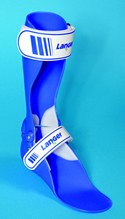
Solid AFO:
This type of AFO stops plantarflexion and also stops or limits dorsiflexion. These are used for dropfoot patients with a nearly complete loss of dorsiflexion strength and who also have an unstable knee. It is a bit bulky, but gives a tremendous amount of control.
Posterior Leaf Spring AFO:
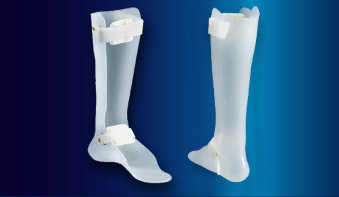
This is a very traditional AFO and has been around for many years. We are not using many of these AFOs anymore as newer AFO models are often a lighter, more comfortable and easier to use. They are, however, often useful for some patients who have instability of the knee along with their dropfoot.
Energy Return AFO:


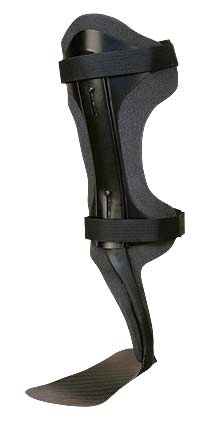
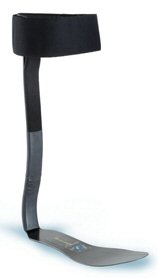
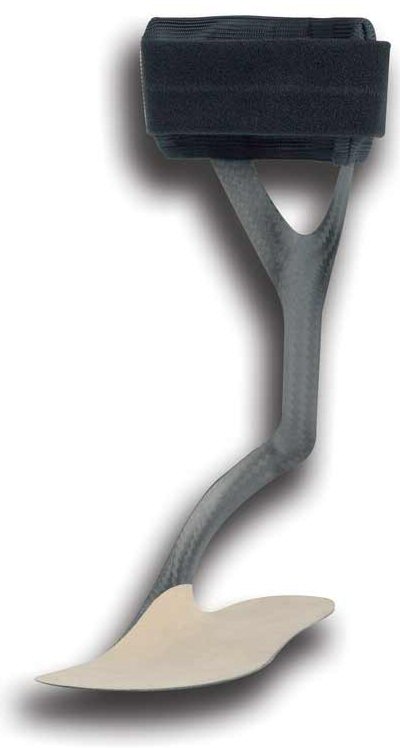
This type of AFO uses a natural flex built into the material of the AFO to provide assist in dorsiflexion. These devices are often made of carbon graphite materials. We have used many of these prefabricated AFOs lately as they provide good control with very little weight. Depending on the degree of dropfoot, we choose one of three different models:
Buy our Recommended Dropfoot Brace Here or Click on one of the pictures below.
Our Recommended Prefabricated Drop Foot AFOs and Accessories
If you cannot visit a doctor to prescribe a dropfoot AFO for you, we have AFOs that you can purchase directly that we recommend for people with mild to moderate dropfoot. These are the braces and assessories we recommend to our patients and they are also affiliate links so we may receive a small commission at no additional cost to you if your order from the link.
Least Expensive Prefabricated Drop Foot Brace
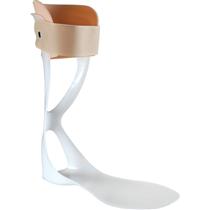 Our first recommended dropfoot AFO is this Ossur Leaf Spring AFO . The Ossur Leaf Spring AFO is a low profile, polypropylene ankle-foot-orthoses, designed to support drop foot. Its new low profile, energy return design makes it more flexible, efficient, and comfortable than traditional models. Lightweight polypropylene and the absence of a heel section makes the Ossur Leaf Spring AFO comfortable to wear, and provides an excellent fit in most men’s and women’s shoes. Costing less than $80, this is the best value we have found in dropfoot AFOs.
Lightest Weight Prefabricated Drop Foot Brace
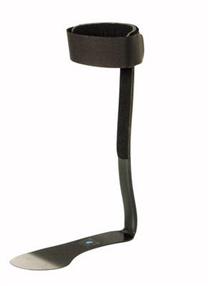 The other OTC AFO that we recommend is the Ossur AFO Light. This carbon-fiber AFO provides necessary support only where it is needed, eliminating unnecessary bulk and providing a cosmetically appealing look. Utilizing the best of Flex-Foot technology and the energy storing properties of carbon fiber. The AFO Light offers a strong and lightweight solution for people with mild to moderate of drop foot. It’s carbon fiber materials are more expensive and this brace runs about $295. We recommend this AFO only for people under 200 pounds. If you weigh more than 200lbs try the Ossur Leaf Spring (above) or the Swede-O Step Smart (below).
Both of these first two AFOs provide similar support. The primary difference is that the Leaf Spring is slightly bulkier and less expensive (under $80) and the AFO Light is less bulky and more expensive ($295).
Best Prefabricated Brace for Mild Dropfoot
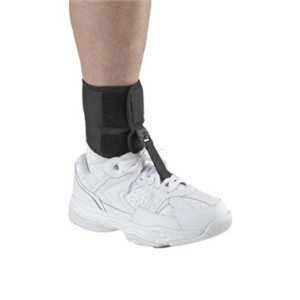
The Ossur Foot-up AFO Ankle Brace is a unique dropfoot AFO that attaches around the ankle and then hooks to the laces of your shoes. This is a comfortable and easy to use brace for those with very mild dropfoot. In general if you can still dorsiflex your foot, but it is just not as strong as the other foot, then this brace might work well. If you have little or no dorsiflexion strength (the ability to bring your toes up toward your leg) then use one of the other braces we have reviewed here.
Best Prefabricated Brace for More Severe Dropfoot
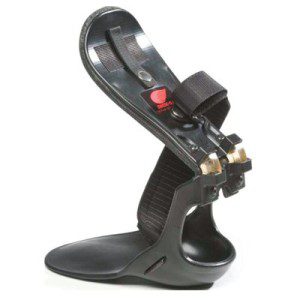
For people with more severe dropfoot the Swede-O Step Smart AFO is likely to give you the most normal gait. Many of our patients have had great success with this AFO. It has a strong hinge on the back of the brace that does a very good job of lifting the foot as the foot comes off the ground in normal walking. Again, we think these devices should be prescribed by a medical professional if at all possible but if you can’t get to one right away, this brace may be very helpful. Be sure to read the return information on these as some sellers do not allow returns. You can see the Swede-O Step Smart Dorsiflexion Assist AFO here.
So Which Brace Should You Get?
There is no one best brace although the information above should help you find the one that best fits your situation. But the reality is that what works well for some people may not work for others. Our suggestion is to first check the return policy for these braces and then order a couple of them. Try them both out around the house and see which one works the best. Then return the other one. Regardless of which one you get, be sure to use proper socks, shoes and arch supports as described below.
Again, we recommend that if at all possible you see a medical specialist before getting a brace. If you absolutely cannot see a qualified provider then you can try one of the braces listed above. They are the best OTC devices we have found for our own patients.
Get the Best Dropfoot Brace Function with Proper Arch Supports, Socks and Shoes
Best results from both devices will be achieved when used with an arch support to stabilize the foot on top of the brace and socks that go to the knee so they protect the skin at the upper portion of the brace. In addition you should wear the brace with very stable shoes that are deeper than average.
Best Arch Supports to Wear with a Dropfoot Brace
Best results will be achieved when a stable custom or prefabricated orthotic is worn on top of the foot plate of the AFO. If you do not have 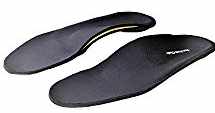 custom foot orthotics, we recommend that you use the FootChair Medical Grade Orthotic. This is the best OTC arch support we have found as it has a very supportive arch and the arch height can be easily adjusted to provide superior comfort and support.
First place the AFO in your shoe. Then place this arch support on top of the foot plate of the AFO.
Best Socks to Wear with a Drop Foot Brace
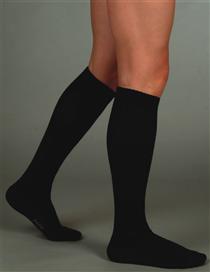 Wearing the correct sock will make wearing an AFO more comfortable. You should wear a knee-high sock. Wear socks made of materials that reduce friction. Avoid cotton, it causes significant friction. We recommend the Juzo Knee High Silver Sole Socks. Available in black and white.
Best Shoes to Wear with a Dropfoot Brace
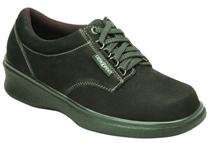 Once you get the AFO, arch support and socks, you will need to get a stable shoe that fits all three items along with your foot. Many of the walking and athletic shoes on our shoe list work well. It’s best to try them all on along with the shoe for best fit. If you don’t have a great shoe store near you and would like to order shoes online, we recommend Orthofeet Shoes to use with AFOs. These are stylish shoes that have a little extra depth to them, so they’re fantastic for people wearing AFOs. You can see Orthofeet Shoes for Women here and Orthofeet Shoes for Men here.
If you have dropfoot, make an appointment today in our Seattle office so that we can work with you to find the best AFO for your condition.
MORE INFORMATION ON FOOT DROP:
The following information on Foot Drop is made available by the National Institutes of Health:
What is Foot Drop?
Foot drop describes the inability to raise the front part of the foot due to weakness or paralysis of the muscles that lift the foot. As a result, individuals with foot drop scuff their toes along the ground or bend their knees to lift their foot higher than usual to avoid the scuffing, which causes what is called a “steppage” gait. Foot drop can be unilateral (affecting one foot) or bilateral (affecting both feet). Foot drop is a symptom of an underlying problem and is either temporary or permanent, depending on the cause. Causes include: neurodegenerative disorders of the brain that cause muscular problems, such as multiple sclerosis, stroke, and cerebral palsy; motor neuron disorders such as polio, some forms of spinal muscular atrophy and amyotrophic lateral sclerosis (commonly known as Lou Gehrig’s disease); injury to the nerve roots, such as in spinal stenosis; peripheral nerve disorders such as Charcot-Marie-Tooth disease or acquired peripheral neuropathy; local compression or damage to the peroneal nerve as it passes across the fibular bone below the knee; and muscle disorders, such as muscular dystrophy or myositis.
Is there any treatment?
Treatment depends on the specific cause of foot drop. The most common treatment is to support the foot with light-weight leg braces and shoe inserts, called ankle-foot orthotics. Exercise therapy to strengthen the muscles and maintain joint motion also helps to improve gait. Devices that electrically stimulate the peroneal nerve during footfall are appropriate for a small number of individuals with foot drop. In cases with permanent loss of movement, surgery that fuses the foot and ankle joint or that transfers tendons from stronger leg muscles is occasionally performed.
What is the prognosis?
The prognosis for foot drop depends on the cause. Foot drop caused by trauma or nerve damage usually shows partial or even complete recovery. For progressive neurological disorders, foot drop will be a symptom that is likely to continue as a lifelong disability, but it will not shorten life expectancy.
What research is being done?
The National Institute of Neurological Disorders and Stroke (NINDS) conducts research related to the neurological conditions that cause foot drop in its laboratories at the National Institutes of Health (NIH), and also supports additional research through grants to major medical institutions across the country. Much of this research focuses on finding better ways to prevent, treat, and ultimately cure the kinds of neurological disorders that cause foot drop.
