




If you have suffered an ankle sprain contact us immediately for an appointment in our Seattle clinic. We are ankle experts and can offer more effective treatment than urgent care clinics.
Ankle Sprains – A Common Injury That Can Cause Long-Lasting Problems
An ankle sprain is the most common injury in sports, accounting for up to 25% of all lost playing time. By definition, it is an injury to the ligaments on the outside of the ankle and roughly 70-80% of athletes that suffer an ankle sprain will suffer a recurrent sprain. After an ankle sprain, 20-40% of patients develop chronic instability (multiple recurring sprains). When we treat ankle sprains, our goal is to get you back to activity as fast as possible and prevent future sprains.
The cause of increased residual ankle instability after an initial lateral ankle sprain is the simple fact that most ankle sprains are not properly treated. All too often, a patient will initially present to an emergency room or another facility where the focus of the evaluation is to rule out a fracture. If there is any follow-up care, it usually neglects rehabilitation of an injury to the ligaments of the ankle.
Effective treatment of an ankle sprain requires careful supervision by a physician and dedicated, disciplined participation by the patient. If you have a sprained ankle or an unstable ankle, make an appointment today to come to the Foot and Ankle Center of Washington. The earlier you get proper treatment, the faster and better you will heal.
Best Treatment for Sprained Ankles
The cornerstone of properly treating a lateral ankle sprain is with immobilization devices that allow early weight-bearing. Bearing weight on your ankle will encourage healing of torn ligament ends and restore the ankle to its most stable position. We provide our patients with an immobilization plan including removable casts and ankle braces.
Current research recommends the following immobilization schedule:
- 10 – 14 days in a walking boot
- 30 days in an ankle brace at all times when weight-bearing
- Another 30 days in an ankle brace for athletic activities (especially side-to-side sports)
This is a general schedule and can vary depending on the degree of injury and the patient’s activities.
Even prior to your appointment, you should wear walking boot or ankle brace.
Studies have shown the fastest recovery comes with wearing a walking boot for the first week after the sprain. After the first week, we usually move patients from a walking boot into an ankle brace. More severe ankle sprains may require two to three weeks in the walker.
See below regarding ankle braces we’ve reviewed and recommend for your ankle sprain.
Our foot experts will guide you to the treatment that will provide the best long-term outcome. If you cannot wear an ankle brace all the time (while doing yoga or wearing shoes that won’t accommodate a brace), taping your ankle is preferable to going without any support. See the video below to see how to tape your ankle properly after a sprain.
Video: Ankle Sprain Taping Technique
We recommend the use of Rocktape kinesiology tape as it holds up well and almost never irritates the skin. Follow the instructions in the 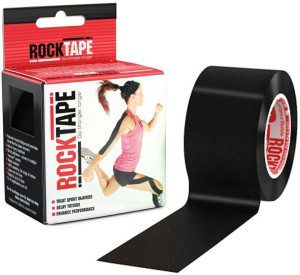 video for proper application of rocktape for ankle sprains.
In addition to bracing and taping, other follow-up therapy to prevent recurring ankle injuries include:
Ankle Brace Review
You should always see a podiatrist or orthopedist if you suspect you’ve sprained your ankle. If you can’t see one right away, get an ankle brace immediately and wear it for at least a month so your torn ligaments can heal in the best position. Failure to wear an ankle brace has been shown to lead to recurrent sprains and long-term joint damage.
There are many ankle braces on the market, and it can be confusing to know which is best for your sprain. Over the past 20 years, we have reviewed many ankle braces for patients in our Seattle foot and ankle clinic. We have found some were uncomfortable, and others did not provide enough ankle support. A number of studies have shown that the best ankle braces have the following features:
- Completely stop “inversion” and “eversion” of the ankle (in and out motion)
- Allows normal ankle flexion (up and down motion)
- Provide a little compression
- Are easy to put on
- Fit well in shoes
- Are comfortable
We usually recommend the Ossur Exoform Ankle Brace as the best for our patients. This brace has an injection molded exoskeleton with soft, breatha ble fabric, combining the compression and comfort of a soft ankle brace with the support offered by rigid ankle braces. Testing shows that this brace reduces ankle inversion by as much as 35% over competing rigid ankle braces. This means that it offers more protection for your injured ankle ligaments.
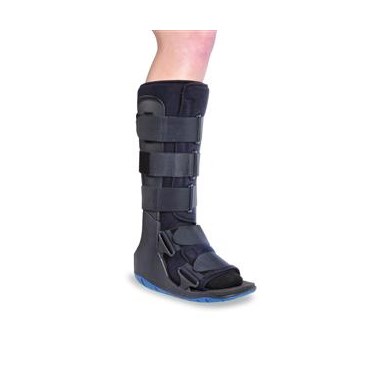
For even more protection in the first two weeks after an ankle sprain use this Ovation Walker.
Improving Strength and Balance After an Ankle Sprain
Your doctor will work with you to help decrease the swelling after an ankle sprain injury. Once swelling has decreased, you will be taught exercises that will help you regain strength in the muscles of your leg. Restoring balance and posture has been shown to be the most important aspect of preventing future ankle sprains.
Although many patients are immobilized while pain and swelling subside, they will go on to develop symptoms of instability if redeveloping balance in the ankle is ignored. You should work with a physical therapist to learn specialized exercises to help you regain balance and proprioception (sense of body position).
Foot Orthotics to Prevent Ankle Sprains
There is considerable research that demonstrates that many patients with chronic instability of the ankle also have instability of the joint directly beneath the ankle (the sub-talar joint). This is the joint at which your foot rolls in and out (pronates and supinates). Properly prescribed custom functional orthotics stabilize the sub-talar joint and help prevent ankle sprains.
The most successful rehabilitation occurs when you can wear your orthoses before you resume activity without your ankle brace. Evaluation for the orthotics should occur about three weeks after the injury – when you’ve returned to normal walking and swelling has decreased substantially.
Shoes to Prevent Ankle Sprains
Shoes that offer exceptional all-around support will help prevent future ankle sprains. When you cone in for an ankle sprain consultation, we will provide recommendations of appropriate shoes for your foot type and a list of shoe stores with personnel trained in proper fitting.
Ankle sprains that are not treated correctly can lead to long-term problems. If you have sprained your ankle or are experiencing ankle symptoms contact us today for an evaluation in our convenient Seattle office. The Foot and Ankle Center of Washington is conveniently located near Swedish Medical Center on Broadway in downtown Seattle.
Call (206) 344-3808 for an appointment about your sprain or other foot or ankle condition or injury or click here to schedule online.
