




How correcting abnormal foot mechanics can help your knees
People who are overweight and obese are at much greater risk of developing osteoarthritis of their knees. Osteoarthritis is basically a wearing away of the cartilage that covers the joint and provides cushioning and protection of the joint. In the person who is carrying too much weight, the wearing down of the cartilage in the knee is much more dramatic due to the sheer weight the knees must support.
CAUSES OF KNEE PAIN IN THE OBESE PERSON
There are a number of factors that contribute to knee arthritis. Obesity is one of the most common.
Here is how obesity affects the knee: the knee is the largest joint in the body and when you walk at a normal speed, it has to support 3 – 5 times your body weight. When you run or climb stairs, force increases to 7 – 8 times your body weight.
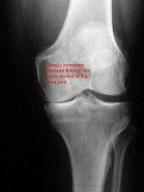
Figure 1 – knee arthritis
When the knee is overstressed due to excessive weight, the soft tissue structures that support the knee joint become over-stressed. This will result in:
- The ligaments which support the knee and keep it straight will start to stretch and tear. This causes the knee to become painful, unstable and weak.
- The cartilage which protects the knee joint starts to wear down and become thin and uneven. When this occurs two things happen:
- Bones rub against each other causing severe pain and stiffness.
- The cartilage, which acts as the body’s best shock absorber, wears down and is unable to protect the body from the shock of each step. This results in more pain, stiffness, and osteoarthritis of the knee – and even the hip and lower back.
With proper protection, this damage to the knee joint might be slowed and pain can be eliminated or decreased.
Other Factors that Increase the Risk of Knee Osteoarthritis
There are other factors that make it much more likely that a person will develop knee osteoarthritis. If these conditions are present in an obese person then the risk of developing arthritis increases greatly.
Pronation is a flattening of the foot as it turns out at the ankle. When the foot pronates, the lower leg and knee are forced to turn inward (internal rotation). This dramatically increases pressure on the inner knee cartilage, which in turn results in damage to the cartilage of the knee – and eventually osteoarthritis of the knee.
To control abnormal pronation custom-made foot orthotics are used to prevent the internal rotation of the lower leg and to help eliminate damage to the cartilage. In cases of knee arthritis, special wedges have to added to the orthotics to help reduce the knee pain. More detailed information on orthotics for knee arthritis is available here.
Heredity: A short leg or bowed legs are just two of a number of biomechanical problems that can contribute to abnormal forces across the knee joint and damage to knee cartilage.
Aging: Normal wear and tear that joints go through on a daily basis.
Trauma: Any injury to the knee that you have experienced at any point of your life can contribute to osteoarthritis at a later date. This injury can be due to over-use, a sprain, a fracture, or surgery.
TREATMENT OF KNEE PAIN IN THE OBESE PERSON
1. Foot orthotics. Foot orthotics for knee arthritis is covered here in detail. In the obese patient, orthotics are specialized to handle the additional load in order to provide the best protection.
2. Shoes
Obese individuals should wear stable shoes that will help prevent excessive pronation and flat arches. Our list of recommended shoes lists proper shoes.
3. Knee braces
Knee braces reduce pain by:
- Stabilizing the knee.
- Providing a light amount of compression to reduce swelling of the knee.
- Supporting the ligaments and tendons that have been affected by knee arthritis. When the cartilage wears down unevenly, some of the ligaments and tendons around the knee are stretched. Unless provided extra support by a knee brace, these stretched ligaments and tendons will cause pain.
Knee braces can be over-the-counter or custom made. Over-the-counter knee braces that work well for some patients are the Comfort Arthritic Knee Wrap and Comfort Elastic Knee Stabilizer. If an over-the-counter knee brace does not provide adequate protection, an orthopedist or physiatrist can prescribe a custom knee brace.
Other Treatments
If you have osteoarthritis of the knee you will also want to get a full evaluation of your knee from your family physician, orthopedist, rheumatologist, or physiatrist (physical medicine and rehabilitation doctor). They may prescribe anti-inflammatory treatments, strengthening, physical therapy, bracing or other treatments.
