




Leading the Way in Helping Golfers’ Foot Problems
The foot functions completely differently in golf than in any other activity. First, your weight is placed lightly on the balls of your feet, balanced between your front and rear foot. Then there is a slight shift to the back foot, then another shift back to the front.
Good foot action is the mark of an accomplished golfer. Abnormal foot mechanics can lead to not only an inefficient golf swing but pain in the feet, ankles, knees and back. We work with golfers every week to help them decrease foot pain and improve foot function.
If you are a golfer with foot problems, call 206-344-3808 or schedule an appointment online in our Seattle clinic here.
Video: Best Orthotics for Golf
Golf Shoes
Disclosure: This page contains affiliate links, meaning we receive a commission if you decide to make a purchase through our links, but this is at no additional cost to you. Our recommendations are based on experience with and knowledge of these products, and we recommend them because they are genuinely helpful and useful, not because of the small commissions we may receive. Please don’t spend any money on these products unless you believe they will help you achieve your goals.
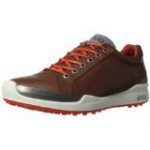
Ecco Golf Shoes
Wearing proper golf shoes is critical. Improper shoes can cause blisters, neuromas (enlarged and painful nerves in the balls of the feet), and other foot injuries. Not long ago, golf shoes were simply wing-tip oxfords with spikes. Today, shoes are constructed using basic principles of athletic footwear and the specific biomechanical principles of golf 1.
Don’t buy golf shoes that wouldn’t be comfortable if you were taking a very long walk. Make sure shoes fit well in the store before purchasing them. It’s best to shop for them late in the day when the feet are slightly swollen. Be sure to try on shoes with the thickest socks you might possibly wear when golfing.
We have evaluated most golf shoes on the market and recommend Ecco golf shoes most often. Compared to most golf shoes, Ecco offer significantly more stability and provide better cushioning.
Ecco golf shoes also have removable insoles which makes it easy to add custom orthotics or OTC arch supports. Especially for golfers with pain in their feet, knees or back, Ecco are our go-to golf shoe.
To see our recommended Ecco golf shoes, go here.
If a round of golf is painful on the feet, first assess the quality of your shoes. Any time pain is not adequately resolved with good, stable golf shoes and is present for more than two or three consecutive rounds, contact us to make an appointment in our Seattle office. We can diagnose and treat any problems and help make your feet an asset, not a liability, to your golf game. Be sure to bring your golf shoes with you.
Foot Orthotics for Golf: Preventing Pain, Improving Game
For the foot that is not able to function normally due to biomechanical conditions such as excessive pronation (rolling in) or supination (rolling out), improved foot biomechanics can be achieved through the use of custom orthoses. Orthoses not only allow the feet to function as they ought to but can reduce the risk of injury brought on by biomechanical imbalances.
Research on Orthotics for Golfers
Several studies have demonstrated the benefits of foot orthotics for golfers.
- A 2001 study stated that “use of these custom orthoses reduced the effects of fatigue associated with playing 9 holes of golf; they could thus improve the likelihood of more consistent performance.”2
- A 2000 study found that “the use of the custom-fit, flexible orthotics in this study had a positive influence on gait in experienced golfers.” 3
- Other studies have demonstrated that orthotics can have positive impact on shot accuracy, golf swing and balance. 4-6
Should Golfers Have Custom Orthotics Specifically for Golf?
If you already wear orthoses in your street shoes, by all means transfer them to your golf shoes. If you play golf on a regular basis, you may want to invest in a pair of golf orthotics – orthotics prescribed specifically for the biomechanics of golf. For optimum control, the unusual function of the feet in golf shoes calls for different orthotic function then might be seen for walking or running. We are experienced in producing golf orthotics for all levels of golfers. To find out if you are a candidate for orthotic devices, contact us to make an appointment for an evaluation.
For a golf orthotic evaluation, call 206-344-3808 or schedule an appointment online here.
The Best Prefabricated Orthotics for Golf
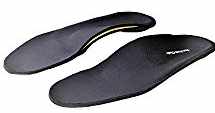
FootChair Adjustable Arch Orthotic
Not every golfer requires a custom orthotic. Many times we recommend that our golfing patients start with a high quality prefabricated orthotic. If you want to try a prefabricated orthotic before you see us, or you are not in the Seattle area so you cannot see us, we most often recommend the FootChair Podiatrist Designed Orthotic with adjustable arch height as the best prefabricated orthotic for golfers.
This unique orthotic is very supportive due to an adjustable arch via pads that can be inserted under the cover. It provides the best stability that we have found in a prefabricated orthotic and fits easily into most golf shoes. You can find the FootChair Podiatrist Designed Adjustable Arch Orthotic for golf here.
Other Golf Injuries and Treatment
The torque of a golf swing can strain muscles in the legs, abdomen, and back. If biomechanical imbalances of the feet are present, these forces will overload some anatomical structures, and increase the likelihood of overuse injuries to tendons, ligaments and muscles. Properly made foot orthotics will help to equalize the weight load on the lower extremity and decrease risk of injury.
References: Golf Orthotics and Golf Shoes
- Williams KR, Cavanagh PR. The mechanics of foot action during the golf swing and implications for shoe design. Med Sci Sports Exerc. 1983;15(3):247-55
- Stude DE, Gullickson J. The effects of orthotic intervention and 9 holes of simulated golf on gait in experienced golfers. J Manipulative Physiol Ther. 2001 May;24(4):279-87.
- Hume PA, Keogh J, Reid D. The role of biomechanics in maximizing distance and accuracy of golf shots. Sports Med. 2005;35(5):429-49.
- Pietrocarlo TA. Foot and ankle considerations in golf. Clin Sports Med. 1996 Jan;15(1):129-46.
- Stude DE, Gullickson J. Effects of orthotic intervention and nine holes of simulated golf on club-head velocity in experienced golfers. J Manipulative Physiol Ther. 2000 Mar-Apr;23(3):168-74.
- Stude DE, Gullickson J. Effects of nine holes of simulated golf and orthotic intervention on balance and proprioception in experienced golfers. J Manipulative Physiol Ther. 1997 Nov-Dec;20(9):590-601.
