




Early Treatment of Bunions in Kids Can Prevent Problems Later in Life
Although bunions are much more common in adults, we do treat a surprising number of kids suffering with bunions. Bunions in children are not normal and should be treated. Our treatment goal is to prevent the bunions from getting larger and to eliminate any pain. If at all possible, bunion surgery on children should be avoided at least until the growth plates of the bones are fused. In fact, surgery should be your very last resort.
If you think your child might have bunions, contact us today for an appointment in our Seattle foot clinic. The earlier we start the treatment, the more likely it is we can avoid surgery.
Video: Bunions in Children | Guide for Parents
A bunion deformity in a child is known as a Juvenile bunion. As with adult bunions, in a bunion in a child the joint at the base of the big toe (the metatarsophalangeal joint) moves at an angle toward the second toe. Juvenile bunions, however, are considered more serious as there are more years available for the bunion to get worse.
Why Do Children Get Bunions?
Shoes rarely play a role in causing bunions in children. Instead, juvenile bunions are usually related to heredity. Often they are secondary to “ligamentous laxity” (loose joints) and excessive pronation. When the child pronates excessively, it places too much pressure on the big toe joint, preventing normal function. Since the toe cannot bend up the way it should, the toe is forced to move to the side. If the child also has loose ligaments, a bunion can rapidly form.
If a parent or other close relative has bunions that bother them it is more likely that the child will have bunion problems also.
Treatment Goals for Juvenile Bunion
Our primary goal is to reduce the forces that are causing the bunion. This won’t reduce the bunion that has formed, but some studies indicate that it may help prevent the bunion from getting bigger.
Non-surgical treatment includes the use orthotics that are specifically designed to prevent bunions, the use of wider shoes and shoe stretching.
Be sure to bring some shoe samples with you to your appointment. Also, we will ask the child to avoid narrow dress shoes and high heels. Prefabricated or custom orthotics can also be very helpful, and may help slow growth of the bunion.
Orthotics to Prevent Bunions in Kids
There is a some evidence that the use of certain types of orthotics may reduce the joint forces that cause bunions. Orthotics won’t make bunions smaller but they can help reduce pain and may help prevent bunions from getting bigger.
We will usually use a prefabricated or custom orthotic to help the big joint work better and prevent abnormal force on the joint.
You can find detailed information here about custom orthotics for bunions.
Prefabricated Orthotics for Children
We recommend that you see a podiatrist familiar with children’s foot conditions for the best outcomes. We may recommend a prefabricated orthotic but we will almost always modify it to work more effectively.
If you don’t have the option to see a children’s foot specialist right away, the prefabricated orthotics below are the ones we recommend most often to our patients. The links are affiliate links, and at no additional cost to you, we may earn a small commission if you decide to make a purchase. We have used these items for our own patients and we recommend them because they are effective and a good value, not because of the small commissions we make if you decide to buy something.
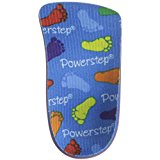
- Our favorite arch support for younger children‘s heel pain (up to kids size 13) is the PowerStep PowerKids Orthotic This
 podiatrist designed device is the best OTC orthotic for reducing pressure on the heel in younger children. It has a higher than average arch so it transfers pressure most effectively. It also has a deep heel cup that will protect the heel.
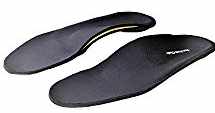
 - For older kids (usually above age 9 or so), we recommend the FootChair Adjustable Arch Orthotic. This is
 an adult device but the smaller sizes usually work well for older kids. It is a unique orthotic as it has adjustable arch height so it works for many arch shapes.
Surgery for Children’s Bunions
Once again we want to make clear that surgery should be a very last resort when treating bunions in kids. In fact, it is almost never necessary. Even if all conservative treatment is tried first, surgical correction of a bunion in a child is usually not recommended until growth of the bone is complete. Doing surgery before the growth plates have closed has potential to damage the growth plates.
In kids who do not respond to non-surgical treatment, however, and who have pain that interferes with their daily activities, surgery to realign the bone and straighten the toe can be done. There are a number of different approaches to bunion surgery in children and the exact procedure would depend on the type and size of the bunion, the age of the child, and how much growth remains.
If your child has a bunion, contact us today for an appointment in our Seattle foot clinic.
